Sales and marketing alignment is critical for consistent revenue growth. Without shared metrics, teams often face miscommunication and inefficiencies. Tracking the right metrics ensures both teams work toward common goals like pipeline growth, lead quality, and revenue generation. Here are the 7 key metrics to focus on:
- Marketing Qualified Leads (MQL) Volume: Measures the number of leads ready for sales engagement, based on agreed criteria.
- MQL-to-SQL Conversion Rate: Tracks how well MQLs transition to sales-qualified leads, highlighting lead quality and follow-up efficiency.
- Marketing's Pipeline Contribution: Evaluates how much of the sales pipeline originates from marketing efforts.
- Sales Cycle Length: Monitors the time it takes to close deals, reflecting process efficiency.
- Win Rate by Lead Source: Shows the percentage of opportunities from each channel that result in closed deals.
- Revenue and Customer Lifetime Value (CLV): Focuses on the financial impact and long-term value of acquired customers.
- Full Funnel Conversion Rate: Tracks lead progression through every stage of the sales funnel for a holistic view of performance.
Why it matters: Companies with aligned sales and marketing teams see around 20% annual revenue growth, while misaligned teams risk a 4% revenue decline. By using shared metrics, teams can identify gaps, improve accountability, and optimize efforts.
Each metric requires clear definitions, consistent tracking in a CRM, and regular reviews. Tools like Hatrio Sales streamline this process, offering automated workflows, real-time dashboards, and actionable insights. Together, these metrics ensure both teams contribute to sustainable revenue growth.
1. Marketing Qualified Leads Volume
Definition and Relevance to Alignment
Marketing Qualified Leads (MQLs) are potential customers who meet specific criteria agreed upon by both sales and marketing teams. These criteria combine factors like company characteristics (firmographics) and engagement behaviors, indicating that a lead is ready to move from marketing's nurturing efforts to sales outreach. By aligning on what defines an MQL, both teams share a common understanding of what qualifies as a "ready" lead, turning MQL volume into a shared responsibility.
Why does this matter? Because MQL volume reflects whether marketing is targeting the right audience. For instance, if marketing delivers 500 MQLs in a month but only 5% convert into opportunities, the issue likely lies in how MQLs are defined rather than the sheer number of leads. Companies that align sales and marketing efforts around shared funnel metrics can see revenue growth of about 20% annually, while misaligned teams risk a 4% revenue decline. A unified definition of MQLs ensures both teams focus on improving lead quality rather than assigning blame, fostering better collaboration and accountability.
How It Improves Collaboration and Accountability
A clear and shared MQL definition, supported by monthly or quarterly volume goals, creates measurable commitments for both teams. Marketing takes responsibility for delivering a consistent number of qualified leads, while sales commits to following up on those leads within service level agreements (SLAs), often within 24 hours. This structure minimizes finger-pointing and encourages joint planning, such as syncing campaign calendars and planning sales capacity.
Take Nasdaq as an example. When they fine-tuned their lead generation strategy and tightened their MQL criteria, they saw a 270% increase in sales-qualified leads, a 74% drop in disqualified leads, and a 66% reduction in cost per SQL. Similarly, one analytics provider reported a 30% boost in conversion rates and fewer lead rejections after standardizing their metrics.
Teams can also use historical conversion rates to work backward from revenue targets. For example, if a company aims for $1,000,000 in bookings with a $50,000 average deal size, a 25% win rate, and a 30% MQL-to-SQL conversion rate, they can calculate the exact number of MQLs needed. This approach ensures both teams are aligned on goals and helps track progress effectively.
How to Measure and Operationalize MQL Volume in a CRM
To track MQL volume accurately, start by configuring your CRM to reflect the agreed-upon definition. Each lead or contact should have a lifecycle stage field (e.g., Subscriber, Lead, MQL, SQL, Opportunity, Customer) and a timestamp for when it becomes an MQL. Use this setup to generate reports that show how many leads transition to MQL status over a specific time period, broken down by source, segment, or territory. This not only highlights where qualified leads are coming from but also identifies which campaigns or channels are driving results.
Automation plays a crucial role here. Set up workflows in your CRM to automatically move leads to MQL status once they meet the agreed-upon score threshold. This score might be based on a combination of firmographic data (like company size, industry, or location) and behavioral signals (such as form submissions, email clicks, website visits, or content downloads). Once a lead qualifies, the CRM can notify a sales rep, assign follow-up tasks, and log the MQL date - providing real-time visibility into lead progress.
Platforms like Hatrio Sales simplify this process by centralizing lead data, applying scoring rules, and tagging leads as MQLs automatically. These tools also allow teams to segment leads by factors like territory, industry, or deal size (in U.S. dollars) and use real-time dashboards to monitor how changes in targeting or campaigns affect MQL volume and revenue outcomes.
Finally, it’s critical to evaluate MQL volume alongside other metrics like MQL-to-SQL conversion rates, opportunity creation rates, win rates, and average deal values. This ensures that an increase in MQLs translates into actual pipeline growth and revenue. By also tracking metrics like cost per lead and marketing's contribution to the pipeline, teams can ensure campaigns are driving profitable growth rather than just inflating lead numbers.
2. MQL to SQL Conversion Rate
Definition and Relevance to Alignment
The MQL to SQL conversion rate tracks the percentage of marketing qualified leads (MQLs) that sales accepts and upgrades to sales qualified leads (SQLs). Essentially, it shows whether marketing's leads align with what sales considers ready for engagement. A steady, healthy rate suggests that both teams are on the same page about what makes a lead "qualified." On the flip side, if marketing marks 500 leads as "qualified" but sales only accepts 25, it's a clear sign of misalignment in how the two teams define a qualified lead.
A strong conversion rate reflects marketing’s understanding of the ideal customer profile and sales’ confidence in marketing’s qualification process. It’s a great indicator of collaboration, as it depends on criteria that both teams agree upon.
Conversion rate benchmarks can vary by industry and channel. For B2B teams, low double-digit rates are often seen as acceptable, while single-digit rates might suggest that marketing is labeling too many leads as qualified. On the other hand, very high rates combined with a stagnant pipeline or revenue growth could mean that the qualification criteria are too strict, leaving the funnel underutilized. To get the full picture, this metric should be evaluated alongside pipeline contribution and win rates. Let’s explore how this metric fosters collaboration and accountability between teams.
How It Improves Collaboration and Accountability
Since both marketing and sales impact this metric, it naturally becomes a shared KPI, encouraging teamwork instead of finger-pointing. When conversion rates shift, leaders can analyze whether the change stems from a new campaign, adjustments in lead routing, updated qualification criteria, or even changes in how quickly sales follows up. Many companies hold weekly or biweekly alignment meetings - often called "smarketing" meetings - where teams review conversion rates by source, campaign, and segment. These sessions often include examples of high-quality and poor-fit leads, helping refine criteria on the spot.
Shared dashboards that display the MQL to SQL conversion rate alongside metrics like pipeline contribution, sales cycle length, and win rates ensure accountability remains balanced. Decisions are then based on a unified dataset, fostering trust between teams.
For instance, one organization improved its conversion rate from low single digits to low double digits in just a quarter by adding clear qualification questions and follow-up agreements in their CRM. This also shortened their sales cycle. Monitoring this metric helps teams stay aligned on lead quality and processes, which is critical for achieving shared revenue goals.
However, loosening SQL criteria to artificially inflate conversion rates can backfire, filling the pipeline with weak opportunities. Similarly, incentivizing marketing solely on MQL volume can lead to lower conversion rates and increased tension between teams. To avoid these issues, it’s essential to pair this metric with revenue-based KPIs, regularly revisit lead definitions, and align compensation plans with shared outcomes instead of isolated metrics.
How to Measure and Operationalize It in a CRM
To effectively measure this metric, start by clearly defining CRM lifecycle stages - such as Subscriber, Lead, MQL, SQL, Opportunity, and Customer - and automate transitions based on agreed-upon scoring thresholds. Use reports to compare the number of leads transitioning from MQL to SQL against the total MQLs generated in a specific period. Filters by team, territory, or campaign can help identify strengths and weaknesses.
Key elements for tracking include:
- Standardized lifecycle stage fields
- Lead source fields
- A shared lead scoring system
- Owner assignment rules
- Timestamps for when records reach MQL or SQL status
Automated alerts can notify sales when new MQLs are ready, enforce follow-up agreements, and capture reasons for lead rejections. This feedback loop allows marketing to improve targeting and content over time.
Platforms like Hatrio Sales simplify this process by centralizing lifecycle stages and engagement data. They offer automation tools for email sequences, sales chatbots, and lead enrichment, which help improve MQL quality and readiness. Additionally, built-in reporting ties conversion rate improvements directly to revenue growth, while activity-based lead scoring ensures only well-qualified leads advance.
Breaking down conversion rates by segment or source - whether by channel, campaign, or market segment - can uncover where high-quality leads are coming from and where adjustments are needed. For example, strong performance in one channel might highlight tactics worth replicating, while weaker areas could signal a need to tweak targeting, messaging, or qualification criteria before further investment.
3. Marketing's Pipeline Contribution
Definition and Relevance to Alignment
Marketing's pipeline contribution measures the qualified sales opportunities generated directly from marketing efforts. Essentially, it answers the question: how much of the sales pipeline originates from marketing? This metric connects marketing activities to revenue, shifting the focus from sheer lead volume to opportunities that can actually close and generate income.
This focus on pipeline contribution fosters alignment between sales and marketing by uniting them around a shared goal: creating a pipeline filled with revenue-ready opportunities. Establishing clear criteria for what qualifies as "marketing-sourced" through a service level agreement (SLA) is key to avoiding misunderstandings. For instance, a marketing-sourced opportunity might be defined as one that originates from a marketing campaign, reaches the sales-qualified lead (SQL) stage, and is untouched by outbound sales efforts.
The impact of alignment is striking. Companies with strong collaboration between sales and marketing, including shared metrics like pipeline contribution, often see 20% annual revenue growth, while those with poor alignment may face a 4% revenue decline. This shared metric not only highlights the importance of alignment but also lays the groundwork for joint planning and execution.
How It Improves Collaboration and Accountability
When sales and marketing teams review pipeline contribution together - whether in weekly or monthly revenue meetings - they can assess whether the marketing-sourced pipeline is sufficient to meet future revenue targets. This shared analysis encourages collaboration on campaign strategies, target accounts, and messaging. It also creates mutual accountability: marketing is responsible for hitting pipeline targets, while sales takes ownership of converting that pipeline within agreed timelines and win rates.
This metric also informs smarter budget decisions. By analyzing trends in marketing-sourced pipeline volume, opportunity value, and conversion rates, leaders can predict how much revenue future campaigns might generate. If certain campaigns or channels consistently produce higher-value opportunities with better conversion rates, budgets can be reallocated to amplify those efforts. Conversely, resources can be pulled from lower-performing channels that fail to deliver results.
By assigning clear responsibilities - marketing for pipeline creation and sales for conversion - both teams are invested in the outcome. To maintain accuracy, teams should apply minimum qualification criteria, such as verifying budget and decision-maker involvement, before counting an opportunity as marketing-sourced. This ensures that low-quality or stalled opportunities don’t inflate the metric. Additionally, setting percentage-based targets without considering the total pipeline needed for revenue goals can lead to missteps. For example, if the company requires $1,000,000 in closed revenue with a 25% win rate, marketing would need to contribute $4,000,000 in qualified pipeline for the quarter, with specific goals by segment or product line.
How to Measure and Operationalize It in a CRM
To make this metric actionable, it’s crucial to operationalize it within your CRM. Start by standardizing pipeline stages so that both sales and marketing teams use consistent criteria for opportunity creation, progression, and closure. Each opportunity should include essential fields like source, dollar value, stage, expected close date, and owner.
Marketing’s pipeline contribution can be tracked through CRM reports filtered by fields such as "Lead Source" or "Primary Campaign." Dashboards displaying total pipeline, marketing-sourced pipeline, and marketing’s percentage contribution provide transparency for both teams and leadership.
Key tracking elements include:
- Standardized opportunity stages
- Lead source and campaign attribution fields
- Opportunity dollar values
- Attribution models
Multi-touch attribution is increasingly favored because it assigns credit to multiple marketing interactions throughout the buyer journey, offering a more accurate view of marketing’s impact. While simpler, single-touch models often overlook the complexity of B2B sales cycles and can undervalue marketing’s role.
SLAs further enhance accountability by setting expectations for both teams. For example, sales might commit to contacting new marketing-qualified leads within a specific timeframe, while marketing ensures lead quality remains high. Regular feedback loops, where sales shares insights on lead quality and lost deals, help refine targeting and improve campaign strategies.
Using an integrated CRM system, like Hatrio Sales, simplifies this process. It centralizes lead generation, automates scoring, and streamlines the handoff from marketing to sales. Opportunities are automatically created based on predefined criteria, and real-time dashboards highlight marketing’s contribution to both pipeline and closed revenue.
Automated lead scoring ensures that marketing delivers high-quality, sales-ready leads, while automated sales follow-ups keep leads engaged, driving them efficiently through the pipeline. Breaking down pipeline contribution by segment, source, or campaign can reveal where the most valuable opportunities originate. For instance, if account-based marketing campaigns or webinars consistently generate larger deals and faster closes, those strategies can receive more investment. On the flip side, underperforming channels may require adjustments in targeting, messaging, or qualification standards before additional resources are allocated.
4. Sales Cycle Length
Definition and Relevance to Alignment
Sales cycle length refers to how long it takes to move a prospect from initial contact to a closed deal, typically measured in days or weeks. This metric is a key indicator of how efficiently your business converts interest into revenue. Many teams analyze it by segment, deal size, or product line to better understand their pipeline dynamics.
When sales and marketing are in sync, the sales cycle often becomes more predictable or even shortens. Marketing focuses on delivering well-qualified leads, while sales follows a structured process. On the flip side, extended or erratic sales cycles can point to misalignment - like marketing targeting the wrong audience or sales not following up on high-intent leads promptly.
Both teams play a critical role in moving deals along. Marketing improves lead quality through tailored messaging and nurturing, while sales advances those leads through qualification, proposals, and negotiations. Aligning these efforts results in more consistent and manageable sales cycles.
How It Improves Collaboration and Accountability
When sales and marketing share visibility into sales cycle length, collaboration becomes far more effective. By reviewing dashboards that break down cycle length by lead source, campaign, and stage, both teams can identify where deals are stalling. This shifts the focus from finger-pointing to problem-solving.
For example, analyzing sales cycle length by audience segment or channel can reveal which groups move through the funnel faster. If one channel consistently closes deals quicker than another, that insight can guide resource allocation and budget decisions. Setting target ranges for sales cycle length in a service level agreement (SLA) ensures accountability: marketing commits to delivering high-quality leads, and sales commits to timely follow-ups. If an unexpected increase in cycle length occurs, it prompts a joint review of strategies around targeting, messaging, and follow-up.
This metric also influences compensation and performance reviews. In some organizations, marketing and sales leaders have their variable compensation tied to improvements in median sales cycle length for qualified opportunities. This ensures that efforts to shorten the cycle don’t compromise deal quality or profitability, reinforcing alignment between teams.
How to Measure and Operationalize It in a CRM
To calculate the average sales cycle length, add up the total days from opportunity creation to deal closure and divide by the number of closed deals:
average sales cycle length = (sum of days from opportunity creation to closed-won) ÷ (number of closed-won deals)
Accurate measurement requires your CRM to consistently track and timestamp key events, such as lead creation, MQL (Marketing Qualified Lead), SQL (Sales Qualified Lead), and deal closure. Both teams need to agree on when the cycle officially starts - whether it’s the first marketing touch, the MQL stage, or opportunity creation.
To operationalize this metric, start by defining clear lifecycle and pipeline stages that sales and marketing both understand. Enforce required fields for stage transitions to ensure accurate data entry, including timestamps for creation and closure dates, as well as lead source and primary campaign details for segmentation.
Build custom reports and dashboards that display the average time between key stages, such as MQL to SQL, SQL to closed-won, or the full cycle from first touch to close. Automating the distribution of these dashboards ensures both teams stay informed during regular review meetings.
Breaking down sales cycle length by channel, industry, deal size, or persona helps pinpoint which strategies yield faster and more reliable results. This data can guide adjustments to targeting, messaging, and processes.
To further streamline the cycle, use automated tools like email sequences, task reminders, and stage triggers. CRM-embedded playbooks can also suggest next steps based on the current stage and persona.
Hatrio Sales simplifies this process by centralizing lead generation, email campaigns, and deal management in one platform. With features like lead scoring, automation flows, and social proof widgets, teams can experiment with strategies to shorten the sales cycle without sacrificing win rates.
Time-based SLAs for follow-up are essential. Many B2B teams aim to respond to high-intent leads within 24 hours or less, as delays at the top of the funnel can extend the overall sales cycle. Monitoring metrics like average time spent in each stage or the time from MQL to first sales touch provides actionable insights to refine the handoff between marketing and sales.
Top-performing teams review sales cycle benchmarks quarterly, analyzing data from the past 6–12 months of closed-won deals. Comparing these trends against external benchmarks, when available, ensures goals remain grounded in real-world performance. As product complexity, pricing, or strategies evolve, updating these targets helps maintain realistic expectations.
5. Win Rate by Lead Source
Definition and Relevance to Alignment
Win rate by lead source calculates the percentage of opportunities from each marketing channel that turn into closed-won deals. It’s a straightforward formula: divide the number of closed-won deals by the total opportunities from a specific source, then multiply by 100%. For instance, if your team generated 50 opportunities from webinars in Q1 and closed 12 of them, the win rate for that source would be 24%.
This metric is a game-changer for aligning sales and marketing teams because it emphasizes lead quality over sheer volume. While marketing might generate a flood of leads, if only a handful convert, sales ends up wasting time chasing prospects that don’t deliver. Tracking win rates by channel helps both teams focus their efforts on the sources that truly drive revenue, creating a foundation for smarter, data-driven collaboration.
Win rates often vary significantly by channel. Referral leads, for example, tend to convert at higher rates - often between 35% and 50% - thanks to trust and a better market fit. On the other hand, leads from gated content might convert at 25% to 40%, while paid ads typically close at lower rates, around 15% to 25%. Understanding these differences allows teams to allocate resources more effectively and rework underperforming channels.
How It Improves Collaboration and Accountability
When sales and marketing share visibility into win rates by source, it replaces finger-pointing with teamwork. Instead of debating over "bad leads" or "poor follow-ups", both teams can dig into the data and identify actionable next steps together.
For example, if referral leads close at three times the rate of paid social leads, marketing could redirect part of its budget to referral programs, co-marketing initiatives, or event follow-ups. Similarly, if a reliable source starts underperforming, both teams can analyze the situation - reviewing call recordings, email campaigns, or recent deals - to determine whether the issue lies with shifting buyer behavior, increased competition, or execution problems.
This metric fosters shared accountability, as both lead quality and sales execution influence the outcome. By setting shared win rate goals - like a 40% target for referrals and 25% for paid ads - teams can align their efforts. Some organizations even tie sales and marketing leaders’ compensation to improvements in win rates for key channels, ensuring that growing lead volume doesn’t come at the expense of quality or profitability.
In Q2 2024, a SaaS company using HubSpot discovered that referral leads had a 42% win rate, while paid search leads were at 18%. By reallocating 25% of their paid budget to referral programs and implementing a dedicated follow-up sequence, they boosted their overall win rate from 22% to 29% and reduced customer acquisition costs by 15% (Source: HubSpot Customer Story, 2024).
How to Measure and Operationalize It in a CRM
To effectively measure and operationalize this metric, you need clean and consistent data in your CRM. Make sure lead sources are recorded accurately using a controlled naming system (e.g., "Paid Social – LinkedIn Ads"). The lead source should be captured at the first point of contact or conversion to maintain clear attribution.
Build dashboards that segment pipeline data by source, showcasing key metrics like win rates, pipeline value, and average deal size. Add filters for time periods, regions, segments, and deal owners to allow deeper analysis. Many B2B teams review these dashboards monthly or quarterly, often using three- to six-month trends to account for seasonal fluctuations and longer sales cycles.
Encourage adoption by integrating these dashboards into regular revenue meetings, setting source-specific targets in quarterly OKRs, and tying incentives to improvements in win rates for strategic channels.
Tools like Hatrio Sales simplify this process by automatically tagging leads with accurate source data from campaigns, LinkedIn outreach, and database searches. This enables your team to create tailored workflows - such as high-touch sequences for warm inbound leads and more educational cadences for colder outbound ones. You can track win rates, response rates, and deal velocities by source in one place, making it easier to experiment with source-specific strategies and fine-tune approaches to maximize success.
When a source shows high win rates but low volume, consider increasing investment in that area - whether through additional content, expanded partner programs, or increased budget - while preserving the factors that make it effective. On the flip side, if a source generates plenty of leads but has a low win rate, it’s worth revisiting your targeting criteria, refining messaging, or adjusting sales tactics to better connect with that audience. High-performing teams continuously update their ideal customer profiles for each source, identifying which industries, company sizes, or other factors perform best in specific channels. This ensures win rate by lead source remains a key driver of smarter targeting, better SLAs, and improved playbooks.
When combined with other metrics like customer acquisition cost (CAC), sales cycle length, and customer lifetime value (CLV) by source, win rate by lead source provides a comprehensive view of performance. Together, these insights help refine strategies and strengthen alignment between sales and marketing.
sbb-itb-b22f30c
6. Revenue and Customer Lifetime Value
Definition and Relevance to Alignment
When it comes to evaluating long-term customer value, revenue and customer lifetime value (CLV) are key metrics. Revenue captures the total dollar amount generated from closed-won deals over a specific period, while CLV estimates the total revenue a company can expect to earn from a customer throughout their entire relationship.
These metrics are essential because they align both sales and marketing teams toward shared goals. Instead of focusing on isolated metrics like lead volume or activity counts, revenue and CLV push teams to prioritize bringing in customers who not only convert but also stick around and grow their relationship with the company over time.
Tracking these metrics together can reveal whether your teams are targeting the right customers. For instance, if revenue increases but CLV remains flat or drops, it may indicate that marketing is bringing in leads that convert quickly but churn just as fast. On the other hand, when both revenue and CLV rise, it shows that the strategies in place - whether campaigns, qualification criteria, or sales conversations - are attracting customers who find value and stay for the long haul.
Aligned teams that focus on long-term value often see sustainable growth. This happens because they prioritize customer quality over short-term wins that don’t last.
How It Improves Collaboration and Accountability
Setting shared revenue and CLV targets transforms the way sales and marketing collaborate. Instead of marketing celebrating lead volume while sales complains about lead quality, both teams are held accountable for the financial value of the customers they bring in and close.
This shared accountability creates a feedback loop. Marketing regularly reviews closed-won deals and churned accounts with sales to understand which campaigns, messages, and channels bring in high-CLV customers. Sales, in turn, provides feedback on which lead sources and content attract prospects who close faster, spend more, and renew consistently. With this information, both teams can refine their strategies - adjusting targeting, improving messaging, and reallocating budgets to focus on the segments and channels that deliver the most value over time.
For example, if customers acquired through educational content campaigns show higher CLV than those from discount-heavy promotions, marketing can shift resources toward thought leadership efforts. Meanwhile, sales can emphasize value and long-term outcomes rather than focusing solely on price. Similarly, analyzing CLV by industry might reveal that certain sectors renew more often and expand faster, prompting both teams to concentrate efforts on those high-value segments.
Service-level agreements (SLAs) also become more impactful when tied to revenue and CLV. A strong SLA outlines quarterly goals for these metrics and breaks them down into actionable components like marketing qualified lead (MQL) volume, conversion rates, average deal size, and retention or renewal rates. Each metric gets assigned clear ownership and timelines, with regular reviews ensuring both teams stay on track. For example, marketing might be responsible for forecasting qualified lead flow, while sales commits to timely follow-ups and accurate data entry.
Some organizations even tie leadership compensation to improvements in CLV for key customer segments. This approach ensures that growing lead volume doesn’t come at the expense of customer quality or profitability. It also removes the blame game that often arises when teams are measured on conflicting goals. These insights can also guide CRM setup and reporting.
How to Measure and Operationalize It in a CRM
Accurate tracking of revenue and CLV starts with clean, standardized data in your CRM. Every deal record should include mandatory fields like deal amount (in U.S. dollars), purchased products or plans, contract start and end dates (formatted as MM/DD/YYYY), and deal type (e.g., new business, renewal, or expansion). Consistent updates to closed-won deals, along with logging any discounts, refunds, or cancellations, ensure that revenue and CLV calculations remain accurate.
To calculate CLV, your CRM should sum all historical revenue per customer account, factor in average retention or renewal duration, and display this as a dedicated CLV field or dashboard widget. A common formula is: average revenue per account × gross margin × average customer lifespan. Documenting this formula ensures consistency across teams.
Shared dashboards can further streamline collaboration. These dashboards should display metrics like new revenue, expansion revenue, churned revenue, and average CLV, segmented by factors such as lead source, campaign, persona, and region. Filters for time periods, deal owners, and customer status (active vs. churned) allow for deeper analysis. Making these dashboards accessible to both sales and marketing leaders enables regular reviews and informed decision-making.
Automated reports and alerts can flag when CLV from a specific campaign or channel falls below a certain threshold. This triggers a joint analysis of potential issues, such as targeting, messaging, pricing, or onboarding processes. Regular data hygiene routines - like quarterly audits, duplicate cleanups, and alignment meetings to review anomalies - help maintain a reliable and consistent data source.
Tools like Hatrio Sales simplify this process by centralizing lead generation, email campaigns, and pipeline management in one platform. By combining CRM data with automation, lead scoring, and enrichment, Hatrio Sales helps teams identify which lead sources, campaigns, and customer segments generate the highest revenue and CLV, enabling them to replicate these successes across U.S. markets.
Segmenting revenue and CLV by company size, industry, region, or product line can also help teams set realistic goals. For instance, enterprise accounts might have higher CLV but longer sales cycles, while small-to-medium business (SMB) customers may show lower CLV but faster close rates. This segmentation allows marketing to tailor campaigns and sales to refine their playbooks, ensuring that each segment is approached with appropriate strategies and goals.
When paired with metrics like customer acquisition cost (CAC), sales cycle length, and win rate by lead source, revenue and CLV provide a clear picture of performance. Together, these metrics enable smarter targeting, better SLAs, and more effective sales and marketing strategies.
7. Full Funnel Conversion Rate
Definition and Relevance to Alignment
The full funnel conversion rate gives sales and marketing teams a clear, shared view of the entire buyer's journey. It tracks the percentage of leads that progress through every stage of the funnel - from the first interaction, like a website signup, through stages such as Marketing Qualified Lead (MQL), Sales Qualified Lead (SQL), opportunity, proposal, and ultimately to a closed-won deal. Unlike metrics that focus on isolated handoffs, this metric encourages teams to treat the buyer's journey as a unified system.
This broader perspective is key to fostering alignment. Instead of pointing fingers when leads drop off, teams can work together to identify where the breakdown happens. For example, tracking full funnel conversion can reveal whether the issue lies in generating enough qualified leads, ineffective follow-up, or challenges with closing deals. Companies that align around this metric often see tangible benefits - research shows that such alignment can drive revenue growth of around 20% annually, compared to a 4% decline in organizations where teams remain disconnected. This shared focus lays the foundation for collaborative problem-solving.
How It Improves Collaboration and Accountability
Because it spans the entire buyer journey, the full funnel conversion rate highlights specific performance issues. Instead of vague complaints, teams can rely on data to pinpoint problems - like noticing a large drop-off in MQLs between outreach and meetings - and work together to address them.
Regularly reviewing this metric in joint revenue meetings fosters shared accountability. Teams can brainstorm and test solutions, such as refining sales enablement materials, adjusting targeting criteria, or improving follow-up processes, and then measure how these changes impact conversion rates at different stages. For instance, if the conversion rate from SQL to closed-won is low, teams might focus on refining objection-handling strategies or reevaluating pricing structures.
One case study from a BI company showed that aligning on unified conversion definitions and dashboards led to a 30% improvement in overall conversion rates and reduced lead rejection by sales. Practical steps informed by full funnel trends might include shifting budgets toward high-performing channels or setting service-level agreements (SLAs) for key handoffs, like ensuring sales follows up with all MQLs within 24 hours.
How to Measure and Operationalize It in a CRM
To make full funnel conversion tracking effective, start with clean, standardized data in your CRM. Each lead record should include consistent fields for lifecycle stage, lead source, campaign, owner, timestamps (formatted as MM/DD/YYYY), deal amount in U.S. dollars, and outcome (e.g., won, lost, or disqualified). Enforcing these fields through validation rules ensures accurate reporting of lead progression and timing.
Set up your CRM so that each funnel stage is a defined pipeline stage with clear entry criteria. Use funnel reports to track conversion rates by stage over specific timeframes, and segment the data by campaign, channel, customer segment, or sales rep. Pin these reports to shared dashboards for easy access, so any unusual trends - like a sudden drop in SQL-to-opportunity conversion - can be addressed quickly.
SLAs for key handoffs, like responding to MQLs within 24 hours, can be automated to improve consistency. Behavior-based triggers, such as intent signals or engagement scores, can help prioritize high-intent leads and move them through the funnel without relying on subjective judgment.
Analyzing funnel performance by lead source and campaign helps teams allocate resources effectively. For example, a SaaS company might discover that paid channels generate high engagement but lead to poor conversion rates, while organic or referral leads perform better across the funnel. By reallocating budgets to higher-performing channels and automating prioritization of high-intent segments, companies can boost win rates and revenue per lead without increasing acquisition costs.
Hatrio Sales simplifies this process by integrating CRM data with tools for lead generation, enrichment, email campaigns, automation, and deal management. Features like automated lead scoring, follow-up workflows, and unified reporting allow teams to test strategies, track their impact on full funnel conversion, and standardize effective practices across sales operations in the U.S..
For U.S.-based businesses, a practical starting point is to analyze historical CRM data and work backward from revenue goals to determine the required number of customers, opportunities, SQLs, and MQLs. This approach helps define the expected conversion rates at each stage.
Experienced revenue leaders treat full funnel conversion as a dynamic system. They experiment with outreach cadences, content offers, qualification criteria, and pricing, and regularly review stage-level conversion rates and time-to-conversion. Structured enablement sessions, where teams refine ideal customer profiles based on actual buyer behavior, ensure that improvements in one stage don’t negatively affect others.
The Top Metrics for Sales & Marketing Alignment (ft. Ray Rike)
How Hatrio Sales Helps Track Shared Metrics
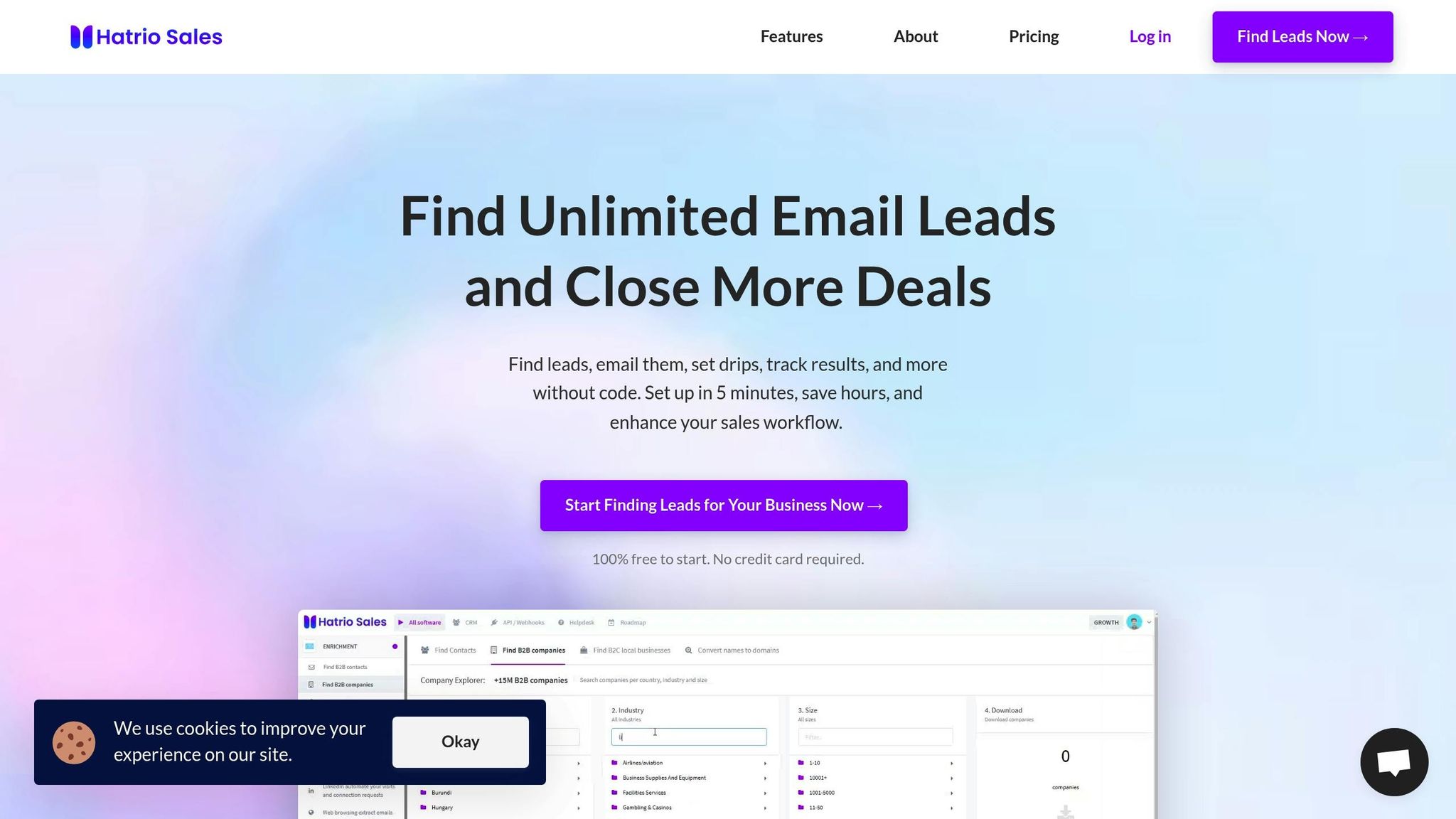
Hatrio Sales takes the complexity out of tracking the seven alignment metrics by centralizing all your sales and marketing data. Instead of juggling disconnected spreadsheets or siloed tools, this CRM brings contact, account, deal, and campaign data into one place. With everyone working from the same real-time information, there’s no need to argue over whose numbers are right. Both teams can quickly identify trends, tackle bottlenecks, and adjust strategies together, all backed by a single source of truth.
The platform also simplifies defining Marketing Qualified Leads (MQLs). By enriching leads with firmographic data, teams can set precise criteria for what qualifies as an MQL - whether it’s based on company size, engagement levels, or specific behaviors. Custom fields and lifecycle stages in the CRM allow for easy configuration. Once these definitions are set, dashboards provide a clear view of MQL volume by campaign, channel, and time period. This helps teams spot seasonal patterns, address funnel gaps, and reallocate budgets more effectively.
Hatrio Sales automates the handoff from MQLs to Sales Qualified Leads (SQLs). Sales reps are notified the moment a lead meets the agreed-upon criteria, allowing them to take immediate action. Outcomes - like accepted, disqualified, or needing further nurturing - are logged directly in the CRM. This feedback loop helps marketing analyze conversion rates and refine qualification criteria without the hassle of manual reviews. Together, sales and marketing can optimize follow-up timing and improve lead quality.
The CRM also tracks timestamps for each stage of the sales process, making it easy to calculate the length of sales cycles and pinpoint where deals are getting stuck. For example, if proposals routinely stall in legal review, teams can implement strategies like automated reminders or playbooks to speed things up. A lead scoring feature adds another layer of efficiency by combining firmographic data with behavioral signals - like email engagement or LinkedIn activity - to prioritize leads with the highest potential. When both teams agree on scoring rules, only the most promising leads are passed to sales, improving acceptance and close rates.
Campaign attribution and opportunity tracking are another strength of Hatrio Sales. The platform connects closed-won deals back to the marketing touchpoints that influenced them, giving both teams a clear view of marketing’s impact on the pipeline. Reports break down marketing-sourced and marketing-influenced revenue by channel, campaign, and time period. This insight helps teams prioritize efforts on sources that deliver not just volume but also higher win rates. For instance, if LinkedIn consistently brings in better-fit accounts than paid search, resources can be shifted accordingly to maximize ROI.
The CRM also tracks deal values in U.S. dollars, along with renewal dates, contract terms, and product details. This data allows for the calculation of key metrics like average deal size, recurring revenue, and customer lifetime value (CLV). By segmenting CLV by acquisition channel, industry, or persona, teams can focus on customers with higher long-term value rather than chasing quick wins. This approach keeps both teams aligned on sustainable growth goals.
Hatrio Sales captures every step of the customer journey, enabling full-funnel conversion analysis. Teams can compare conversion rates across segments, campaigns, and time periods to see where alignment efforts are working - or where handoffs and messaging need improvement. Automated tools like drip campaigns, behavioral triggers, and service-level agreements (e.g., 24-hour response times) help reduce funnel leakage and maintain stable metrics.
Finally, revenue leaders can set up shared dashboards that showcase all seven alignment metrics, formatted in U.S. currency and date styles for clarity. Regular joint meetings to review these dashboards ensure both teams stay aligned on goals, troubleshoot issues, and experiment with changes to messaging, campaigns, or sales processes. These tools provide a complete view of the sales funnel, reinforcing how Hatrio Sales keeps sales and marketing in sync every step of the way.
Conclusion
When sales and marketing teams focus on the same seven metrics, they create a cohesive revenue engine. Instead of celebrating lead volume while overlooking conversion gaps, both teams zero in on what truly matters: converting qualified leads, shortening sales cycles, and increasing customer lifetime value. This alignment produces clear business results. Companies with strong collaboration between sales and marketing see revenue grow by about 20% annually, while those with poor alignment experience an average 4% drop in revenue.
These results come when metrics guide daily decisions, not just quarterly reports. When both teams share real-time data on MQL-to-SQL conversion rates, pipeline contributions, and win rates by source, they can quickly identify breakdowns in handoffs or pinpoint which campaigns are driving deals that close. Businesses that centralize their metrics and align their teams using a shared dashboard have reported conversion rate improvements of around 30% and a noticeable reduction in rejected leads by sales. For example, one SaaS company struggled with MQL-to-SQL conversion rates below 20%. By redefining their ideal customer profile and MQL criteria together, they boosted conversion rates to 45% and increased marketing's pipeline contribution from 30% to 60% in just nine months.
Using a unified CRM where both teams track lead scoring, campaign attribution, deal stages, and revenue in U.S. dollars eliminates conflicting dashboards and blame-shifting. For instance, Hatrio Sales uses shared metrics like lead enrichment, automated drip campaigns, and funnel analytics to improve conversions and close deals. Another B2B firm analyzed shared data and discovered that LinkedIn-sourced leads closed 30% faster and had a 25% higher average deal size. By reallocating budget accordingly, they achieved a 20% increase in quarterly revenue.
To make this work, adopt the seven metrics and regularly review a shared dashboard. Tie response times, follow-up schedules, and handoff standards to specific targets. Hold joint meetings to refine campaigns and sales processes based on the data. These metrics form the foundation of a unified revenue engine. When sales and marketing operate from the same data, every step of the sales cycle improves - turning shared metrics into measurable growth and lasting collaboration between teams.
FAQs
How does aligning sales and marketing teams contribute to revenue growth?
Aligning sales and marketing teams can have a big impact on revenue by ensuring both groups are working toward the same objectives. When these two teams collaborate well, they create a smoother experience for customers - from the first interaction all the way to sealing the deal.
Some of the biggest advantages include generating higher-quality leads, as marketing can hand off more precisely targeted prospects to the sales team. Plus, deals can close faster thanks to better communication and more efficient workflows. This kind of alignment doesn't just improve how things run day-to-day; it also supports steady growth by keeping everyone focused on common goals and strategies.
How can I measure and improve the conversion rate from MQLs to SQLs?
To boost your MQL-to-SQL conversion rate, the first step is to establish clear definitions for both Marketing Qualified Leads (MQLs) and Sales Qualified Leads (SQLs) tailored to your business. This shared understanding ensures that marketing and sales teams are aligned and working toward the same goals.
Regularly monitor this conversion rate using your CRM or analytics tools. Calculate it by dividing the number of SQLs by the total MQLs over a specific time frame. Look for trends and pinpoint any obstacles in the handoff process between marketing and sales.
To improve the conversion rate, prioritize lead scoring to focus on the most promising prospects, fine-tune your messaging to better engage leads, and foster open communication between your sales and marketing teams. Tools like Hatrio Sales can be a game-changer by streamlining workflows, automating follow-ups, and offering data-driven insights to help you fine-tune your strategy.
Why is it important to track win rates by lead source, and how can this data improve marketing strategies?
Tracking win rates by lead source gives businesses a clear picture of which marketing channels are bringing in leads that actually turn into sales. This kind of insight helps companies zero in on the channels that work best, so they can double down on what’s effective and rethink strategies for those that aren’t pulling their weight.
When you know how each lead source is performing, it becomes easier to make smart, data-backed decisions. Teams can boost ROI, streamline their processes, and create better alignment between sales and marketing efforts. Tools like Hatrio Sales make this even easier by offering powerful features to manage and analyze lead sources, ultimately helping to improve overall results.